Premier League Sponsorship Landscape Shifts as Unlicensed Gambling Deals Reach Half of Clubs
Gisela Washington · Sep 12, 2026

Premier League Sponsorship Landscape Shifts as Unlicensed Gambling Deals Reach Half of Clubs
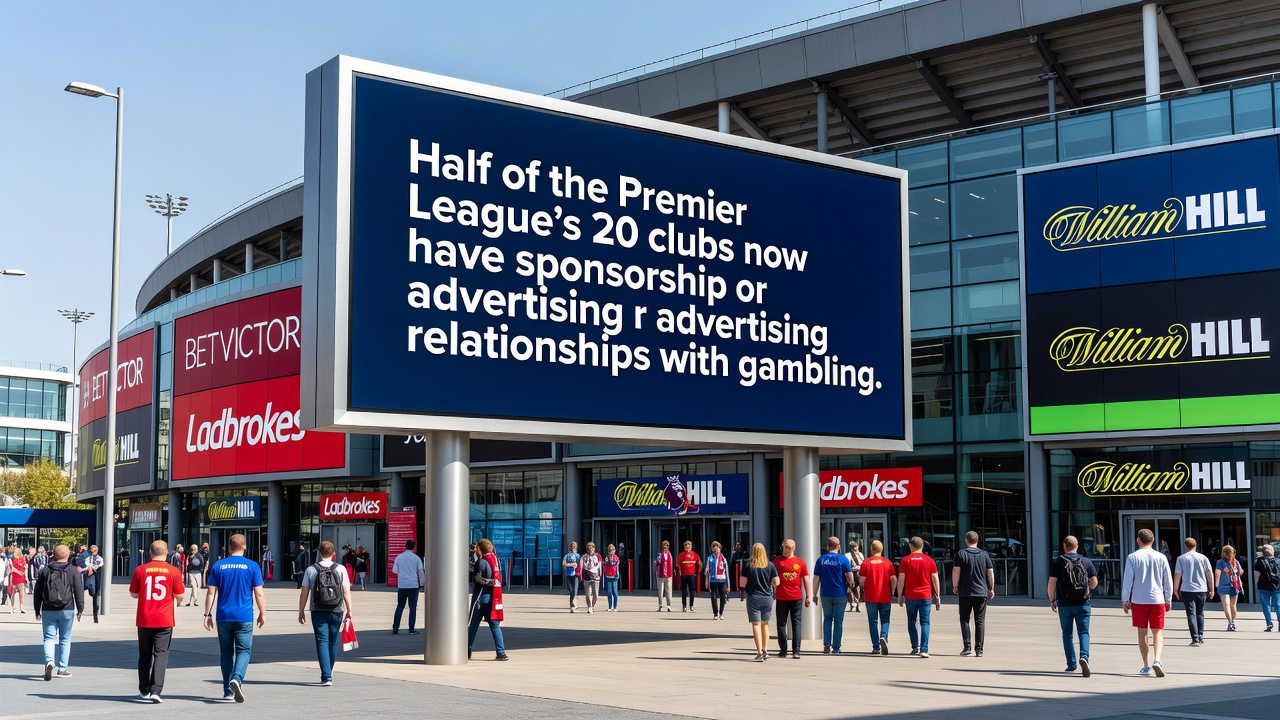
Ten of the Premier League’s twenty clubs maintain sponsorship or advertising ties with gambling operators that lack UK licences, a figure that doubled from six clubs earlier in the summer, and this development places those revenue streams in the path of a proposed government prohibition slated for 2027. teh eight-week consultation period examining a ban on such arrangements concluded in September 2026, setting licensed domestic firms such as Ladbrokes and William Hill against league interests while the share of Britain’s betting activity occurring outside regulated channels continues to expand.
Current Sponsorship Distribution Across Clubs
Figures compiled ahead of the consultation deadline show that exactly half the league’s members now carry deals with offshore or otherwise unlicensed entities, whereas the remaining ten clubs either work exclusively with UK-authorised operators or maintain no gambling partnerships at all. Club finance teams have structured these agreements to cover shirt-front placements, sleeve patches, training-ground branding and digital perimeter advertising, each generating multi-year income streams that clubs have already factored into future budgets. Because the proposed restriction targets only unlicensed operators, the ten affected clubs face a narrower set of options once the rules take effect, whereas clubs partnered solely with Ladbrokes, Entain or William Hill stand to remain unaffected by the licensing criterion.
Mechanics of the Proposed Restriction
The consultation document outlined a straightforward licensing test: any gambling company seeking to advertise or sponsor within the Premier League must hold an operating licence issued by the UK Gambling Commission. Under the timetable presented, the prohibition would come into force during 2027, giving clubs roughly twelve months after the consultation closed to renegotiate or terminate existing contracts with non-compliant partners. Government officials framed the measure as an extension of existing advertising standards rather than a new tax or levy, noting that the policy aligns with the broader objective of directing all licensed gambling activity through operators subject to consumer-protection requirements and tax obligations.
Position of Licensed Operators During Consultation
Licensed firms submitted evidence arguing that the growth of unregulated betting platforms, which operate without contributing to the statutory levy or adhering to affordability checks, undercuts both public-health safeguards and the commercial position of authorised companies. Representatives from Entain and William Hill pointed to data indicating that a rising proportion of UK bettors now place wagers through sites hosted outside the jurisdiction, a trend they linked to aggressive marketing by those same unlicensed entities. Their submissions therefore supported the consultation’s core proposal while simultaneously requesting clearer enforcement mechanisms to prevent clubs from simply shifting sponsorship spend to new offshore partners after 2027.
Premier League Revenue Exposure and Timeline
Club executives have not disclosed the aggregate value of the ten unlicensed deals, yet industry analysts estimate the annual payments range from low seven figures for mid-table clubs to double-digit millions for those with higher global visibility. Because many of these contracts extend beyond the 2027 implementation date, early termination clauses or forced renegotiations now sit on the table, creating uncertainty in multi-year financial planning. The league itself has maintained that sponsorship income supports academy development, stadium infrastructure and community programmes, and any reduction would require offsetting measures that could affect competitive balance.
Market Context and Unregulated Betting Growth
Parallel statistics released alongside the consultation show the unregulated segment capturing an increasing share of total UK betting turnover, driven by lower tax burdens and fewer restrictions on bonuses or payment methods. Licensed operators have responded by highlighting enforcement gaps that allow offshore sites to advertise through social-media channels and influencer partnerships that fall outside traditional broadcast rules. The consultation therefore addressed both the sponsorship channel and the wider advertising ecosystem, although the final drafting focused specifically on the former because existing legislation already covers direct advertising by unlicensed operators in other media.
Next Steps After Consultation Closure
With the eight-week window now closed, the Department for Culture, Media adn Sport will review submissions before presenting draft legislation. Clubs holding unlicensed deals have begun preliminary discussions with alternative sponsors, while some licensed operators have signalled willingness to expand existing relationships to fill any gaps created by the ban. Observers note that the outcome will depend on whether the final regulations include transitional relief for contracts signed before the consultation opened or whether they apply strictly from the 2027 effective date.
Conclusion
The shift from six to ten clubs with unlicensed gambling partners over a single summer illustrates how quickly sponsorship patterns can evolve ahead of regulatory change. Once the prohibition takes effect in 2027, the ten affected clubs will need to decide whether to replace those arrangements with licensed operators, diversify into non-gambling categories, or absorb the revenue shortfall. Licensed firms, meanwhile, will monitor enforcement to ensure the policy achieves its stated aim of reducing the commercial advantage currently enjoyed by unregulated platforms.